Checklist
Documents Required for ADNOC Field-Site Transport: A Contractor Checklist
To enter an ADNOC field site, a truck typically needs a valid CICPA gate pass for both driver and vehicle, an ADSD-certified heavy-vehicle driving licence, a working IVMS/GPS unit with its certificate, current vehicle registration and insurance, and a load manifest or delivery note — plus a Civil Defence hazmat (ADR) permit and Chalwyn valve if the cargo is dangerous goods. Missing any one of these is the most common reason a vehicle is turned away at the gate.
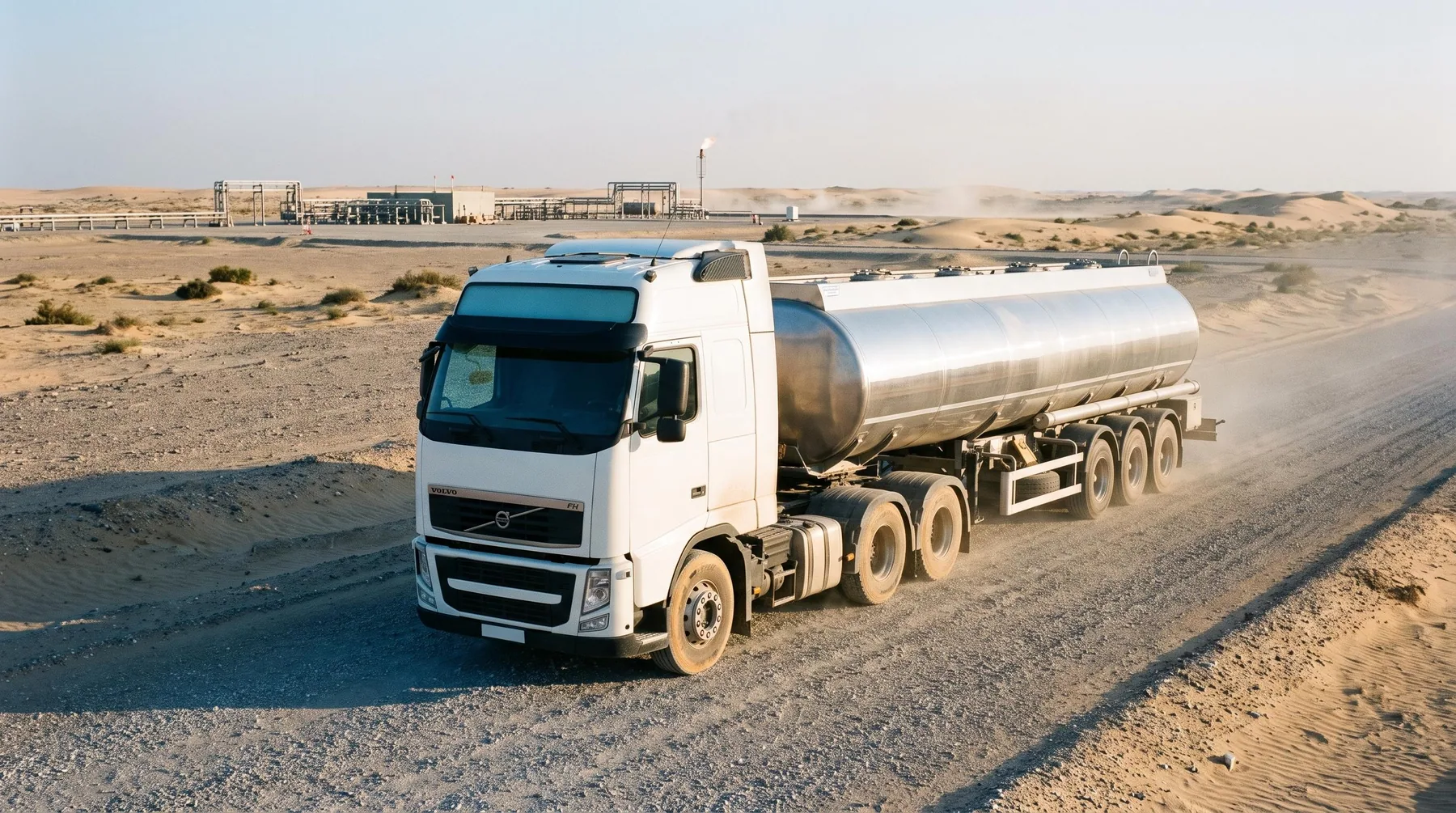
Approved, cleared & compliant

What documents does a truck need to enter an ADNOC field site?
A truck entering an ADNOC field site generally needs a complete gate-access set: security clearance, driver certification, vehicle tracking, valid vehicle papers, and cargo documentation. ADNOC and its operating companies run restricted, guarded sites, so the gate check verifies both the person and the vehicle before entry.
Think of it as five layers — security (CICPA), driver (ADSD licence), tracking (IVMS), vehicle (registration and insurance), and cargo (manifest, plus hazmat papers where relevant). A gap in any layer usually means the vehicle waits outside until it is resolved.
- CICPA gate pass — for the driver and the vehicle
- ADSD-certified heavy-vehicle driving licence
- IVMS/GPS unit fitted and certified
- Vehicle registration (Mulkiya) and valid insurance
- Load manifest / delivery note tied to a work order or gate pass
- Civil Defence hazmat (ADR) permit + Chalwyn valve — dangerous goods only
What is a CICPA pass and who needs it — the driver or the vehicle?
Both. CICPA (Critical Infrastructure and Coastal Protection Authority) clearance is the security pass that authorises entry to ADNOC and other critical-infrastructure sites, and it is issued separately for the driver and for the vehicle. A cleared driver in an uncleared truck — or the reverse — will not be admitted.
CICPA passes are sponsored against a specific facility or operating company and carry an expiry date, so a pass valid for one site or period is not automatically valid elsewhere. Because our drivers and vehicles are already CICPA-cleared, this layer is arranged in advance rather than improvised at the gate. For a deeper explanation, see our dedicated guide on what a CICPA pass is.
Related: What is a CICPA pass? CICPA vs PDO passes explained
What driver credentials are required for restricted-area transport?
The driver must hold a UAE heavy-vehicle driving licence for the class of truck being driven, and for ADNOC field work that licence should be ADSD-certified — trained and assessed to Abu Dhabi heavy-vehicle standards. A standard car or light-truck licence does not qualify a driver for lowbed or heavy-transport work on site.
For dangerous goods, the driver also needs valid hazmat (ADR) training and, at many sites, a defensive-driving or site-specific induction record. Keeping these current is part of why we run CICPA-cleared, ADSD-certified crews rather than ad-hoc drivers.
- UAE heavy-vehicle licence for the correct truck class
- ADSD certification for Abu Dhabi heavy-vehicle standards
- Valid hazmat (ADR) training for dangerous-goods loads
- Site induction / HSE passport where the operating company requires it
Related: ADSD-certified heavy driver supply
Why does the truck need an IVMS/GPS certificate?
ADNOC operating companies require an In-Vehicle Monitoring System (IVMS) on trucks entering their sites so that speed, harsh braking, seatbelt use and route can be monitored to ADNOC HSE standards. The gate check confirms the unit is fitted and functioning, and a valid IVMS/GPS certificate documents that the device was installed and calibrated by an approved provider.
Every truck in our fleet carries IVMS/GPS as standard, which means live tracking is available on the job and the certificate is ready at the gate. A vehicle with a disconnected or uncertified unit can be refused entry even if every other document is in order.
Related: IVMS & UAE truck-tracking rules
What extra documents apply to dangerous goods (hazmat) loads?
Dangerous-goods moves — fuels, chemicals, gases and other hazardous cargo — carry an additional layer on top of the standard gate set. The vehicle needs a Civil Defence hazmat (ADR) transport permit, correct UN-class placarding and documentation, and a Chalwyn (air-intake shutoff) valve fitted to the engine so it can be stopped safely in a hazardous atmosphere.
The driver must hold current ADR hazmat training, and the load must be documented with the correct dangerous-goods declaration and manifest. These requirements exist under UAE regulations and ADNOC HSE standards; they are non-negotiable at the gate, so they are best confirmed before dispatch rather than discovered on arrival.
- Civil Defence hazmat (ADR) transport permit
- Chalwyn air-shutoff valve fitted to the engine
- Correct UN-class placarding and dangerous-goods declaration
- Driver with valid ADR hazmat training
- Route and timing agreed to approved dangerous-goods rules
Related: Chemical & hazardous cargo transport Dangerous goods transport rules (ADR)
How far ahead should a contractor arrange gate passes?
As early as possible. CICPA clearance is sponsored and processed against a named site, and lead times vary by operating company and site, so a same-day pass is rarely realistic for a new driver or vehicle. Distances also shape the schedule: field sites sit well inland from our Musaffah base — for example Habshan is about 150 km, ASAB about 210 km, Ruwais about 240 km and Qusahwira about 330 km — so a delayed gate pass can cost a full mobilisation window.
Because our drivers and vehicles are already CICPA-cleared and IVMS-equipped, we can usually mobilise to ADNOC field sites without waiting on fresh security processing — but any site-specific or operating-company-specific pass still needs confirming ahead of time. Send us the site and dates early and we will flag what is needed.
The gate-access checklist at a glance
Before a truck leaves for an ADNOC field site, run this checklist. If every item is ticked and current, the vehicle should clear the gate without a hold.
- CICPA pass — driver: valid, correct site, not expired
- CICPA pass — vehicle: valid, plate matches
- Driving licence: heavy-vehicle class, ADSD-certified
- IVMS/GPS: fitted, working, certificate on hand
- Vehicle registration (Mulkiya): current
- Insurance: valid and appropriate to the cargo
- Load manifest / delivery note: matches the work order or gate pass number
- Hazmat only — ADR permit, Chalwyn valve, placarding, ADR-trained driver
Move to an ADNOC field site — let us handle the gate documents
You should not have to assemble this paperwork yourself. Our drivers and vehicles are CICPA-cleared and ADSD-certified, every truck carries IVMS/GPS, and we hold Civil Defence hazmat (ADR) permits for dangerous-goods work — so the gate-access set travels with the job.
Tell us the ADNOC site (Habshan, ASAB, Ruwais, Bab, Bu Hasa and others), the cargo and the dates, and we will confirm exactly which documents apply and mobilise a compliant unit. Send the details through the quote form, call +971 58 227 4083, or message us on WhatsApp — quotes are answered within 2 business hours, and operations run 24/7.
Frequently asked questions
What is the single most common reason a truck is turned away at an ADNOC gate?
An expired or mismatched CICPA pass. Because the pass is issued separately for the driver and the vehicle and is tied to a specific site and expiry date, the most frequent problem is a pass that has lapsed, belongs to a different facility, or covers the driver but not the truck. Confirming both passes are current and site-correct before dispatch avoids most gate holds.
Is a standard UAE driving licence enough for ADNOC field-site transport?
No. The driver needs a UAE heavy-vehicle licence for the truck class, and for ADNOC field work it should be ADSD-certified to Abu Dhabi heavy-vehicle standards. A car or light-truck licence does not qualify a driver to operate lowbeds or heavy transport on an ADNOC site. Dangerous-goods loads add a valid ADR hazmat training requirement on top.
Do I need a Chalwyn valve for every load, or only dangerous goods?
Primarily for dangerous goods. A Chalwyn valve is an engine air-intake shutoff that lets a diesel engine be stopped safely in a hazardous atmosphere, so it is required for hazmat transport into oil and gas sites alongside the Civil Defence ADR permit and correct placarding. Some operating companies extend the requirement more broadly, so confirm the specific site rule before dispatch.
Does the vehicle really need IVMS, or is a phone GPS acceptable?
A dedicated IVMS unit is required, not a phone. ADNOC operating companies mandate an In-Vehicle Monitoring System that records speed, braking, seatbelt use and route to their HSE standards, installed and certified by an approved provider. The gate check confirms the fitted unit is working, and a phone app does not meet that requirement. Every truck in our fleet carries certified IVMS/GPS as standard.
If Decent Way handles the transport, do I still need to provide any documents?
We provide the vehicle- and driver-side documents — CICPA clearance, ADSD-certified drivers, IVMS/GPS, registration, insurance and hazmat (ADR) permits where needed. You typically provide the cargo-side items: the delivery note or manifest, the valid ADNOC work order or gate pass number for the site, and any consignee details. Share the site and dates early and we will tell you exactly what falls to each side.
Which ADNOC field sites do you serve, and how far are they?
We serve ADNOC field sites across the Al Dhafra region from our Musaffah base. Approximate distances are Al Dabbiya about 70 km, Mirfa/Hameem about 120 km, Bab about 140 km, Habshan about 150 km, Sahil about 180 km, Bu Hasa about 190 km, ASAB about 210 km, Ruwais and Jebel Dhanna about 240 km, Barakah about 250 km, Shah about 270 km and Qusahwira about 330 km. Tell us your site and we will plan a compliant, gate-ready move.