Guide
Dangerous Goods Transport in the UAE: ADR Classes, Permits & Compliance
Transporting dangerous goods on UAE roads requires a hazardous materials permit, ADR-classified cargo, certified drivers and vehicles, and travel on approved routes and time windows. In Abu Dhabi this is governed under UAE federal traffic law and Civil Defence (ADR) requirements, with additional QCC and ADNOC HSE conditions for oil-and-gas cargo. This guide explains the nine ADR classes and the permit regime a compliant carrier works within.
Approved, cleared & compliant

What counts as dangerous goods, and what are the ADR classes?
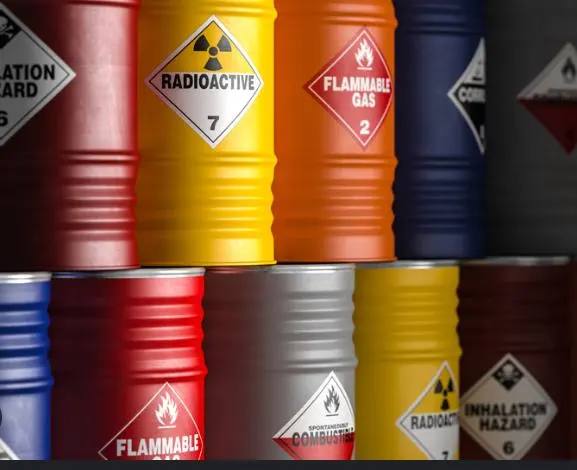
Dangerous goods are materials that pose a risk to people, property or the environment during transport, and internationally they are sorted into nine ADR classes by the type of hazard. The class decides the placard, the UN number, the packaging and much of how the load must be handled and routed.
In oil-and-gas work the most common are flammable liquids and gases (crude, condensate, diesel, LPG), corrosive chemicals, and toxic or oxidising substances — but a compliant carrier plans for any of the nine.
- Class 1 — Explosives
- Class 2 — Gases (flammable, non-flammable, toxic; e.g. LPG)
- Class 3 — Flammable liquids (crude, condensate, diesel, solvents)
- Class 4 — Flammable solids / spontaneously combustible / water-reactive
- Class 5 — Oxidising substances and organic peroxides
- Class 6 — Toxic and infectious substances
- Class 7 — Radioactive material
- Class 8 — Corrosives (acids, alkalis)
- Class 9 — Miscellaneous dangerous substances and articles
Related: Chemical & hazardous cargo transport Chemical & hazmat cargo transport in Abu Dhabi
Do you need a permit to move hazmat on UAE roads?
Yes. Moving dangerous goods by road in the UAE requires a hazardous materials transport permit and, for the vehicle and load, Civil Defence approval under ADR requirements. The permit ties together the classified cargo, an approved vehicle, a certified driver and an agreed route.
In Abu Dhabi, oil-and-gas cargo carries extra layers: the QCC (Quality and Conformity Council) regime for the goods themselves, and ADNOC HSE conditions when loading, unloading or moving within operator sites. Because the paperwork is issued against a specific consignment, the details of what you are shipping — class, UN number, quantity and packaging — need to be right before a permit is raised.
Related: Oversize load permits & escorts ADNOC restricted-area document checklist
What makes a vehicle and driver ADR-compliant?
An ADR-compliant move needs the right equipment and the right people on the same job. The vehicle must carry the correct class placards and UN numbers, an ADR emergency kit (spill containment, extinguishers, PPE), and, for flammable service, engine safety fittings such as a spark arrestor and a Chalwyn air-intake shut-off valve.
The driver must hold an ADSD-certified heavy-vehicle licence plus dangerous-goods (hazmat) training, and understand the load’s emergency response. For restricted oilfield destinations, the driver and vehicle also need CICPA clearance to enter. Every Decent Way truck runs IVMS GPS, so a hazmat move can be tracked against its approved route in real time.
- Correct class placards and UN number displayed on the unit
- ADR emergency kit: spill containment, extinguishers, PPE
- Spark arrestor and Chalwyn valve for flammable (Class 2/3) service
- ADSD-certified heavy-vehicle driver with hazmat training
- CICPA-cleared driver and vehicle for restricted sites
- IVMS GPS tracking on every truck
Related: IVMS & UAE truck-tracking rules What is a CICPA pass?
Why do dangerous goods follow approved routes and time windows?
Hazmat cargo travels on approved routes and, often, within set time windows to keep it away from dense population, sensitive infrastructure and peak traffic. The shortest line on a map is rarely the permitted one; the route is agreed as part of the permit and reflects Civil Defence and, on operator ground, ADNOC HSE expectations.
That is why lead time and accurate cargo details matter. When we quote a run to a field site — Habshan at roughly 150 km from our Musaffah base, Ruwais at 240, Bu Hasa at 190 or Shah at 270 — the plan already accounts for the approved corridor, escort needs and any night-shift window rather than a straight-line estimate.
- Habshan — approx. 150 km from Musaffah
- Bu Hasa — approx. 190 km
- ASAB — approx. 210 km
- Ruwais — approx. 240 km
- Shah — approx. 270 km
- Qusahwira — approx. 330 km
Related: Musaffah to Ruwais heavy transport route Transport to Habshan & Bab
How does hazmat classification change loading and documentation?
Once cargo is classified, its ADR class drives the paperwork and the handling. A dangerous-goods declaration or transport document travels with the load, listing the UN number, proper shipping name, class and packing group so responders and inspectors know exactly what is on board.
Segregation rules also apply: certain classes cannot ride together — an oxidiser (Class 5) with a flammable (Class 3), for example — so mixed consignments are planned carefully or split. Packaging must match the class and be certified, and placards must be visible on all required sides of the unit before it moves.
What happens in an incident, and who is responsible?
A compliant carrier plans for the incident it hopes never happens. Drivers carry the transport document and emergency response information for the specific class on board, and the ADR kit lets them contain a small spill and isolate an ignition risk while emergency services are called.
Under UAE regulations, moving dangerous goods without the required permit, placarding or certified crew can lead to penalties and detention of the vehicle, and the consignor and carrier share responsibility for correct classification and documentation. That shared duty is why we confirm the class, UN number and packaging with you up front rather than assuming — getting the declaration right protects everyone in the chain.
Request an ADR-compliant hazmat quote
Decent Way is an ADNOC-approved carrier running CICPA-cleared, ADSD-certified crews and Civil Defence (ADR) permitted vehicles for dangerous-goods moves across Abu Dhabi and the wider UAE. Tell us the ADR class or UN number, the quantity and packaging, the pickup and destination, and whether the site is CICPA-restricted — and we will confirm the permit path, route and equipment.
Send the details through the quote form, call +971 58 227 4083, or reach us on WhatsApp. Quotes are answered within 2 business hours, and operations run 24/7 for day and night-shift windows.
Frequently asked questions
What is a hazardous materials transport permit in the UAE?
It is the authorisation required to move dangerous goods by road, issued against a specific consignment. It ties together the ADR-classified cargo, an approved vehicle, a certified driver and an agreed route, and is subject to Civil Defence (ADR) requirements. For oil-and-gas cargo in Abu Dhabi, QCC and ADNOC HSE conditions apply on top.
What are the nine ADR dangerous-goods classes?
They are: Class 1 explosives, Class 2 gases, Class 3 flammable liquids, Class 4 flammable solids, Class 5 oxidisers and organic peroxides, Class 6 toxic and infectious substances, Class 7 radioactive material, Class 8 corrosives, and Class 9 miscellaneous dangerous substances. The class sets the placard, UN number, packaging and handling rules.
Do your drivers and trucks meet ADR requirements?
Yes. Our heavy-vehicle drivers are ADSD-certified with dangerous-goods training, and our vehicles carry Civil Defence (ADR) permits, correct placarding, an ADR emergency kit, and spark arrestors and Chalwyn valves for flammable service. Drivers and vehicles are also CICPA-cleared for restricted oilfield sites, and every truck runs IVMS GPS.
Can dangerous goods be transported at night in the UAE?
Often, yes — hazmat frequently moves within set time windows, and some approved routes favour night-shift travel to avoid peak traffic and dense areas. The window is agreed as part of the permit and route plan. Our operations run 24/7 across day and night shifts, so we can align a move to the approved window.
What information do you need to quote a hazmat move?
The ADR class or UN number, the quantity and packaging, the pickup and destination points, and whether the site is CICPA-restricted or open. With those we can confirm the permit path, plan an approved route, flag any escort or segregation needs, and quote — usually within 2 business hours.
Who is responsible if cargo is misclassified?
Under UAE regulations, the consignor and the carrier share responsibility for correct classification and documentation. That is why we confirm the ADR class, UN number and packaging with you before a permit is raised — an accurate dangerous-goods declaration protects the crew, the public and everyone in the transport chain.