HSE
Fuel Tanker Safety in Abu Dhabi: The HSE Standards ADNOC Sites Expect
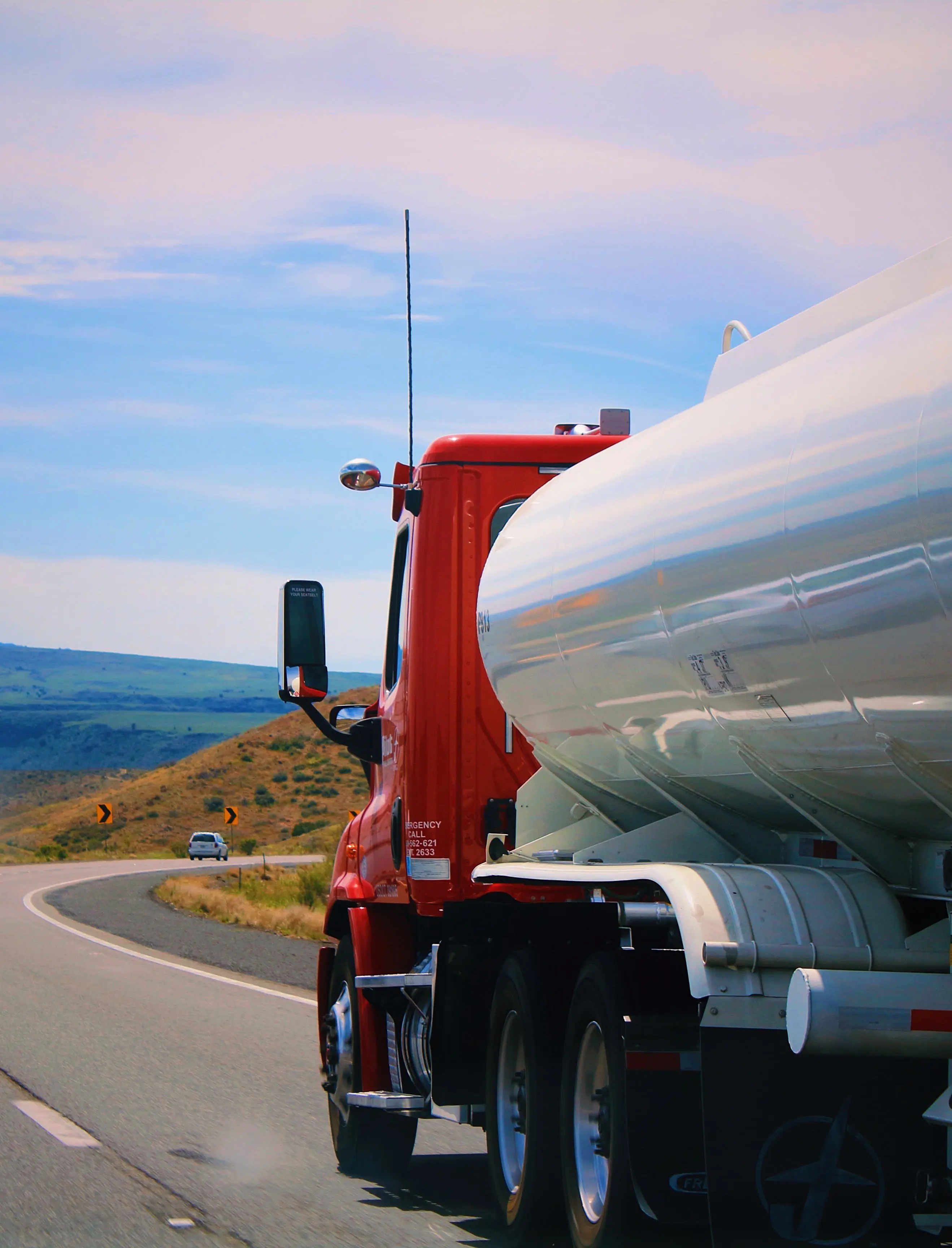
Before a fuel tanker is allowed onto an ADNOC site, the field team audits the truck itself — its Chalwyn fuel cut-off valve, spark arrestor and QCC-compliant fittings — along with the driver’s ADSD certification, the Civil Defence (ADR) hazmat permit and live IVMS tracking. On ADNOC contracts these are not optional extras; they are the gate. Decent Way prepares its tankers against this audit list from its Musaffah base in Abu Dhabi, so a unit arrives site-ready rather than being turned back at the gate.
Approved, cleared & compliant

Why tanker safety is contractual on ADNOC sites
On an ADNOC field site, fuel tanker safety is written into the contract, not left to good intentions. Before a truck is cleared through the gate, the site HSE team checks the vehicle, its safety fittings, the driver’s certificates and the hazmat permit against a defined list. If any item is missing or expired, the unit is turned back — the load never reaches the site.
That is why the safety build of the tanker matters as much as the tanker itself. A unit that is not fitted and permitted correctly costs you a wasted trip and a gap in supply. Decent Way carries the full stack on every fuel unit so the audit at the gate is a formality, not a risk.
Related: Oil & gas tanker transportation Fuel & diesel tanker transport in Abu Dhabi
Vehicle safety fittings: Chalwyn valve, spark arrestor, QCC-compliant unit
The fittings audit centres on stopping the truck from becoming an ignition source around fuel vapour. Three items sit at the core: a Chalwyn valve that cuts the engine if it over-revs on vapour, a spark arrestor on the exhaust, and a tanker unit built to QCC compliance for the product it carries.
These are fitted and certified on the vehicle, not bolted on at the gate. Decent Way specifies tankers fitted to the standard the product and the receiving site require, so the vehicle side of the audit is satisfied before the unit leaves Musaffah.
- Chalwyn valve — an automatic air-intake shut-off that stalls the engine if it runs away on fuel vapour
- Spark arrestor — fitted on the exhaust to stop hot particles escaping near flammable vapour
- QCC-compliant tanker unit built and certified for the fuel product carried
- Compartment seals, vapour controls and emergency shut-off valves in working order
- Fire extinguishers, wheel chocks and hazard signage carried and in date
Permits and driver certification: Civil Defence (ADR) and ADSD
A compliant tanker also needs the paperwork and the person behind the wheel to match the load. Fuel moves under a Civil Defence (ADR) hazmat permit for the specific product, and the driver has to hold an ADSD heavy-vehicle certificate plus a CICPA clearance for secured oil & gas access.
The gate team checks that each of these is current, not just held at some point. Decent Way keeps this stack live on every fuel unit — CICPA-cleared driver and vehicle, ADSD-certified driver, and a Civil Defence permit that covers the exact dangerous goods being carried.
- Civil Defence (ADR) hazmat permit matched to the fuel or product carried
- ADSD-certified heavy-vehicle driver trained for hazardous-materials driving
- CICPA clearance for both driver and vehicle at secured sites
- Valid vehicle registration, tanker inspection and third-party test certificates
Related: Dangerous goods & hazmat transport rules (UAE) Chemical & hazardous cargo transport
Grounding, bonding and safe loading & offloading
The highest-risk moments in a fuel run are loading and offloading, because moving fuel builds up static that can spark. The control is grounding and bonding: the tanker is earthed and bonded to the loading point before any product flows, so charge drains away instead of jumping as a spark.
Around that, the driver follows a fixed procedure — no engine running where the site prohibits it, no phones, spill kit and extinguisher ready, and a bonded connection confirmed before the valve opens. Decent Way drivers work to this procedure as part of the ADNOC HSE standard, and the same discipline applies whether the product is diesel or a more hazardous chemical.
- Earth the tanker and bond it to the loading or offloading point before product flows
- Confirm the bonded connection is secure before any valve is opened
- No ignition sources — engine off where required, no phones, no naked flame
- Spill kit, absorbents and fire extinguisher positioned and ready
- Controlled flow rate and constant supervision through the transfer
Journey management for long overnight field runs
A fuel run to a remote field site is often a long haul, sometimes overnight, so ADNOC sites expect a journey management plan rather than an open-ended drive. That plan sets the route, the permitted driving hours, rest and fatigue controls, and check-in points, so the tanker is accounted for the whole way.
For long lanes to the western region, this is how a delivery stays both safe and predictable. Because Decent Way operates 24/7 with day and night shifts, runs can be planned around site access windows while keeping driving hours and rest within the standard.
- Planned route with defined driving hours and rest stops
- Fatigue controls for overnight and long-distance runs
- Check-in points so the tanker is tracked the whole journey
- Timing set around site access windows and refuelling schedules
Related: Bulk diesel delivery vs app refuelling in Abu Dhabi
Tracking, accountability and what Decent Way brings
The last piece the audit expects is visibility: IVMS GPS on the truck so speed, route and stops are monitored live, giving the client the accountability trail their HSE reporting needs. It also backs the journey management plan — the site can see the tanker is where it should be, driving as it should.
Decent Way brings all of this together as a service: tankers specified to the applicable compliance standard, with Chalwyn valves and spark arrestors, Civil Defence (ADR) permits, CICPA-cleared and ADSD-certified drivers, grounding and bonding discipline, journey management and IVMS on every unit — run to ADNOC HSE standards from a Musaffah base. We do not claim zero incidents; we run to the standard and document the controls behind it. Send the product, volume, route and site access and we come back with a clear quote, usually within 2 business hours.
Related: Oil & gas tanker transportation Fuel & diesel tanker transport in Abu Dhabi
Frequently asked questions
What is a Chalwyn valve and why do ADNOC sites require it?
A Chalwyn valve is an automatic air-intake shut-off that stalls the engine if it over-revs on stray fuel vapour, stopping the engine from becoming an ignition source. ADNOC sites require it — along with a spark arrestor — because a fuel tanker works around flammable vapour, so the truck itself has to be built not to spark. Decent Way fits these on its fuel units.
What does an ADNOC site audit before a fuel tanker is allowed in?
The gate team checks the vehicle safety fittings (Chalwyn valve, spark arrestor, QCC-compliant unit), the tanker inspection certificates, the Civil Defence (ADR) hazmat permit for the product, and the driver’s ADSD certificate and CICPA clearance — plus live IVMS tracking. If any item is missing or expired, the unit is turned back at the gate.
Why are grounding and bonding needed during loading and offloading?
Moving fuel builds up static electricity that can discharge as a spark near flammable vapour. Grounding the tanker and bonding it to the loading point drains that charge away safely before any product flows, which is why it is done before the valve is opened. It is the main control during the highest-risk part of a fuel run.
Are your fuel tanker drivers certified for hazardous materials?
Yes. Every fuel tanker driver is ADSD-certified for heavy vehicles and trained for hazardous-materials driving, and each tanker moves under a Civil Defence (ADR) hazmat permit for the product it carries. Drivers and vehicles are also CICPA-cleared for access to secured oil & gas sites.
How do you manage safety on long overnight runs to field sites?
Long runs go out under a journey management plan that sets the route, permitted driving hours, rest and fatigue controls, and check-in points, so the tanker is accounted for the whole way. IVMS GPS tracks speed, route and stops live. Because we run 24/7 with day and night shifts, runs are timed around site access windows while keeping driving hours within the standard.
What does a QCC-compliant tanker unit mean?
It means the tanker unit is built and certified to the applicable compliance standard for the fuel product it carries, covering how the vessel is constructed, sealed and fitted. Together with the Chalwyn valve and spark arrestor, it is what makes the vehicle side of the ADNOC audit pass. Decent Way specifies units that meet the applicable standard where the load requires it.