Guide
Chemical & Hazardous Cargo Transport in Abu Dhabi
Chemical and hazardous cargo in Abu Dhabi must move on ADR-classified vehicles with Civil Defence hazmat permits, drivers trained to dangerous-goods standards, and an approved route and paperwork for every load. Decent Way is an ADNOC-approved carrier that runs CICPA-cleared, IVMS-tracked trucks to Ruwais, KEZAD and the emirate’s petrochemical and industrial sites 24/7. This guide explains what compliant chemical transport requires and how to brief a carrier so your shipment clears the gate first time.
Approved, cleared & compliant

What makes a chemical transport company compliant in the UAE?
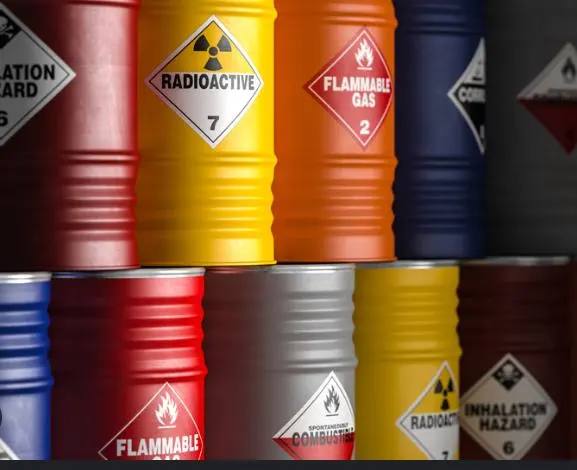
A compliant chemical transport company in the UAE holds Civil Defence hazmat (ADR) permits, runs vehicles classified for the dangerous-goods class it carries, and puts trained, certified drivers behind the wheel. Under UAE regulations, hazardous cargo cannot legally move on a general flatbed with an untrained driver — the vehicle, the crew and the paperwork all have to match the load.
For loads bound for ADNOC and Borouge sites, the bar is higher still: the carrier must be an ADNOC-approved supplier with CICPA-cleared drivers and vehicles, IVMS GPS on every truck, and drivers certified to ADSD heavy-vehicle standards. Decent Way meets each of these, which is why our units clear controlled gates rather than being turned back at them.
- Civil Defence hazmat (ADR) permits matched to the dangerous-goods class
- ADNOC-approved supplier status for controlled oil & gas sites
- CICPA-cleared drivers and vehicles; IVMS GPS on every truck
- ADSD-certified heavy-vehicle drivers trained in dangerous-goods handling
- Correct placarding, documentation and an approved route per load
Related: ADR chemical & hazardous cargo transport UAE dangerous-goods transport rules (ADR)
Which ADR classes and cargo types can you move?
We handle packaged and containerised dangerous goods across the common ADR classes seen in Abu Dhabi’s petrochemical supply chain — drummed chemicals, IBCs, ISO tanks, corrosives, flammables and oxidisers among them. The right equipment and permit depend on the UN number and class, which is why we ask for the safety data sheet (SDS) up front.
Bulk liquid-in-tanker and specialised high-risk classes are handled by arrangement so we can confirm the correct tank, valve and escort setup before committing. For flammable-liquid work into oil & gas sites, spark-arrestor requirements such as a Chalwyn valve on the prime mover are part of the site-entry conversation, not an afterthought.
- Drummed chemicals, IBCs and palletised packaged goods
- ISO tanks and tank containers on flatbed or lowbed
- Corrosives, flammables and oxidisers (packaged)
- Bulk liquid tankers and higher-risk classes — by arrangement
How do you serve Ruwais and Borouge safely?
Ruwais sits about 240 km west of our Musaffah base, and it is one of the routes we run most for petrochemical clients including Borouge polymer feedstock and packaged product. Because the distance is long and the destination is a controlled industrial complex, planning matters: we confirm CICPA clearance, the correct ADR placarding, the approved route and the site’s entry window before the truck rolls.
Running 24/7 with day and night shifts lets us hit early gate slots or overnight loading windows without rushing the safety steps. IVMS tracking means you — and the site — can see the unit’s position and status for the whole run, which controlled facilities increasingly expect.
Related: Transport to Ruwais industrial complex Musaffah to Ruwais heavy transport route
What about KEZAD, ICAD and Musaffah chemical loads?
Short-haul industrial-zone work is a large part of Abu Dhabi chemical logistics, and it is where fast, reliable turnaround pays off. KEZAD, ICAD and the wider Musaffah industrial belt host chemical manufacturers, blenders and distributors whose loads move between plants, warehouses and ports on tight schedules.
Being locally based in Musaffah keeps our response time short for these lanes and supports clients’ ICV score; our ICV certification is in progress. Whether it is a single drummed consignment across the zone or a recurring shuttle, the same compliance stack — ADR permits, CICPA clearance where needed, correct placarding — applies.
Related: KEZAD industrial-zone logistics Khalifa Port & KEZAD container logistics
What documents and permits travel with a hazmat load?
Every hazmat move carries a paperwork set that the crew presents at the gate and keeps in the cab. Getting this right before dispatch is the single biggest reason a load clears on the first attempt rather than being held. The essentials are consistent across UAE dangerous-goods work.
We assemble and check this pack against the load before the truck leaves, so nothing is missing when it reaches a controlled entry point.
- Safety data sheet (SDS) with UN number and ADR class
- Civil Defence hazmat (ADR) transport permit
- Correct placarding and orange-panel marking on the vehicle
- CICPA gate documentation for controlled sites
- Delivery note / manifest and driver dangerous-goods certification
Related: ADNOC restricted-area document checklist What is a CICPA pass?
How do you keep drivers and cargo safe on the road?
Safety on a hazmat run comes from trained people, maintained equipment and monitored routes working together. Our drivers are ADSD-certified for heavy vehicles and briefed on the specific hazards of the class they carry, from securing packages to what to do in a spill or incident.
Vehicles are maintained to ADNOC HSE standards and inspected before dangerous-goods work; where site rules require it, prime movers are fitted with spark-arrestor equipment such as a Chalwyn valve. IVMS GPS records route adherence and driving behaviour, and our operations desk stays reachable around the clock so a driver is never alone with a problem.
Get a compliant chemical transport quote
Tell us the UN number and class, the packaging and quantity, the pickup and destination (Ruwais, KEZAD, ICAD or another site), and whether the gate is CICPA-restricted — and send the SDS. With that we can confirm the right vehicle, permit and route, and come back with a clear quote, usually within 2 business hours.
Request it through the quote form, call +971 58 227 4083, or reach us on WhatsApp. Operations run 24/7; quotes are handled Monday to Friday, 08:00–16:00, and answered within 2 business hours.
Frequently asked questions
Do you have Civil Defence hazmat permits for chemical transport?
Yes. Decent Way holds Civil Defence hazmat (ADR) permits and moves dangerous goods on vehicles classified for the load, with drivers certified to dangerous-goods and ADSD heavy-vehicle standards. The permit and placarding are matched to the UN number and ADR class of your specific cargo.
Can you deliver hazardous cargo to Ruwais and Borouge?
Yes. Ruwais is about 240 km from our Musaffah base and is one of our regular petrochemical lanes, including Borouge sites. Because our drivers and vehicles are CICPA-cleared and ADNOC-approved, controlled-gate access is built in; we confirm the route, permit and entry window before dispatch.
What information do you need to quote a chemical shipment?
Send the UN number and ADR class, the packaging type and quantity, the pickup and destination, whether the gate is CICPA-restricted, and the safety data sheet (SDS). With those we can confirm the correct vehicle, permit and route and quote, usually within 2 business hours.
Do you transport bulk liquid chemicals in tankers?
We handle packaged goods, IBCs, drums and ISO tanks as standard, and arrange bulk liquid-in-tanker and higher-risk classes on request so the correct tank, valve and escort setup is confirmed first. Share the SDS and quantity and we will advise the right configuration for your product.
Are your trucks tracked during a hazardous move?
Yes. Every truck carries IVMS GPS, so route adherence, position and driving behaviour are monitored throughout the run — something controlled petrochemical and ADNOC sites increasingly require. Our operations desk is reachable 24/7, so a driver on a night run is never without support.