Coverage
Heavy Transport Across ICAD, Musaffah & KEZAD: Intra-Zone & Port Moves
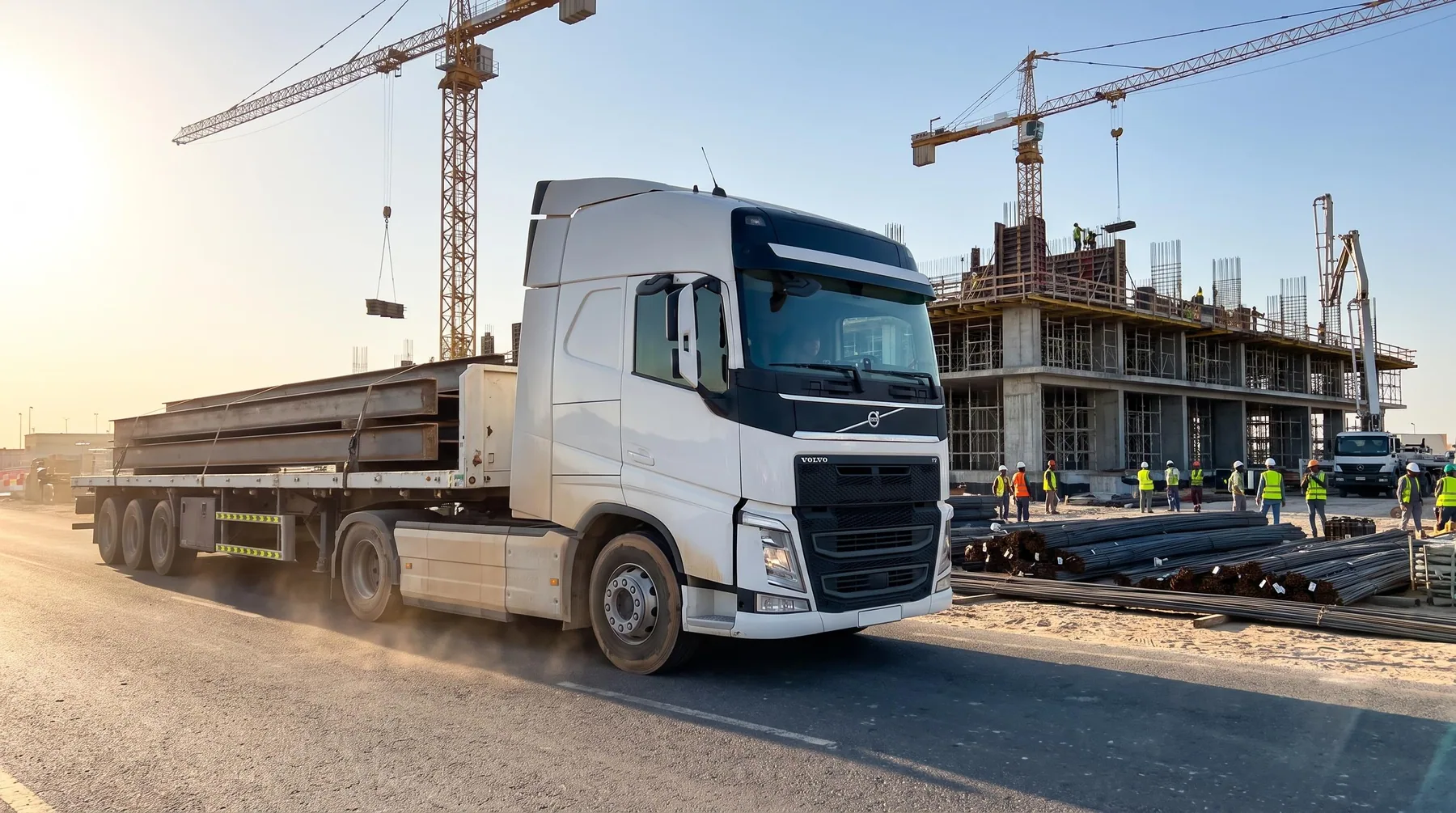
Heavy transport across ICAD, Musaffah and KEZAD covers the short-haul and intra-zone moves that keep Abu Dhabi’s industrial belt running — container drayage from Khalifa Port, plant and machinery relocation between factories, project cargo out of fabrication yards, and oversize loads within the zones. Decent Way is based right inside this belt in Musaffah, so a unit reaches a gate with low dead-mileage and fast response, runs to ADNOC HSE standards with CICPA-cleared drivers and vehicles and IVMS/GPS, and operates 24/7.
Approved, cleared & compliant

What is inside the ICAD, Musaffah and KEZAD belt?
ICAD, Musaffah and KEZAD form one contiguous industrial corridor south and east of Abu Dhabi city, and most heavy cargo here moves short distances between facilities rather than on long highway runs. ICAD (Industrial City of Abu Dhabi, phases I, II and III) holds heavy and medium industry, steel, fabrication and metals; Musaffah is dense with workshops, equipment yards and warehousing; and KEZAD (Khalifa Economic Zones Abu Dhabi) is a large manufacturing and logistics zone next to Khalifa Port, the emirate’s main container gateway.
Being based in Musaffah puts Decent Way inside this belt, next to the factories, yards and the port that generate the moves — which is why so much of the work is intra-zone drayage and plant relocation rather than long-distance haulage.
- ICAD I/II/III — heavy and medium industry, steel, fabrication and metals
- Musaffah — workshops, equipment yards and warehousing (our base)
- KEZAD — manufacturing and logistics next to Khalifa Port
- Khalifa Port — the emirate’s main container gateway
What heavy moves happen inside the zones?
Most zone work falls into a few repeatable patterns: container drayage from Khalifa Port to KEZAD, ICAD and Musaffah yards; plant and machinery relocation between factories and workshops; project cargo moving out of fabrication yards to the port or onward to site; and oversize loads shifted within the zones. These are short legs, but they still need the right trailer, permitted access and a driver who knows the gates.
Decent Way handles all four as day-to-day zone work, alongside container haulage and drayage, plant relocation and project cargo across the belt.
- Container drayage from Khalifa Port to KEZAD, ICAD and Musaffah
- Plant and machinery relocation between factories and workshops
- Project cargo out of fabrication yards to port or site
- Oversize loads moved within and between the zones
Related: Port operations & container logistics Khalifa Port & KEZAD container logistics
Gate access and permits inside the zones
The zones and the port run on controlled gates, so a move is only as smooth as its access. Facilities in ICAD, KEZAD and around Khalifa Port work to security passes and gate procedures, oversize loads need permits and escorts, and secured oil & gas–linked sites require CICPA clearance — all of which an operator has to line up before the truck arrives.
Decent Way keeps CICPA-cleared drivers and vehicles, IVMS/GPS and documented HSE to ADNOC standards as standard, and Civil Defence (ADR) permits where hazmat is involved. Knowing the belt’s gates and routes is part of why a locally based operator moves faster through them.
Related: Oversize load permits & escorts ICAD heavy transport
Which trailers suit zone and port work?
The right trailer depends on what is moving. Flatbeds of 40–60 ft carry containers, steel, structures and general project cargo; lowbeds and low-loaders take tracked plant, machinery and taller loads that need a low deck. Three-axle lowbeds handle roughly 40–60 t, four-axle lowbeds around 80 t, and 100 t-plus or SPMT/modular work is arranged for the heaviest and most awkward pieces.
Because the fleet spans flatbeds, lowbeds and container haulage, a single operator can cover most of what the zones and the port generate — from a stack of containers to a single oversize module.
- Flatbeds 40–60 ft — containers, steel, structures, general project cargo
- Three-axle lowbeds — machinery and plant up to ~40–60 t
- Four-axle lowbeds — heavier plant up to ~80 t
- 100 t-plus and SPMT/modular — by arrangement for the heaviest pieces
Related: Flatbed trailer transport Lowbed trailer transport Which trailer for your load? How to transport an excavator in the UAE
From the zones to the ADNOC fields
A lot of what is built in the belt does not stay there. Fabricated modules, skids, structures and equipment made in ICAD and KEZAD, and machinery staged in Musaffah yards, are moved onward to project and field sites across Abu Dhabi. That makes zone-to-field the natural extension of the intra-zone work — the same units that shift cargo between factories also run it out to the fields.
Being based in Musaffah lets Decent Way bridge both ends: collecting from the fabrication yard or the port, then delivering onward to site as heavy equipment and project cargo, all under ADNOC HSE standards with CICPA-cleared crews where the destination requires it.
Related: Heavy equipment & project cargo KEZAD heavy transport Abu Dhabi heavy transport
Why use an operator based inside the belt?
For zone work, location is a real advantage. A unit already in Musaffah does not deadhead in from far away, so dead-mileage stays low, response is fast, and a truck can be at a gate quickly when a factory, yard or port slot opens up. Availability matters too — operations run 24/7, so moves can be timed around gate hours and berth windows rather than office hours.
Tell us the pickup and delivery points, the load and any gate or CICPA access, and we will come back with a clear quote — usually within 2 business hours. Send it through the quote form, call +971 58 227 4083 or reach us on WhatsApp on the same number.
- Low dead-mileage — units are already in Musaffah, inside the belt
- Fast response to a gate when a factory, yard or port slot opens
- Operations 24/7 — timed around gate hours and berth windows
- Quotes answered within 2 business hours
Frequently asked questions
Do you handle container drayage from Khalifa Port?
Yes. Container drayage from Khalifa Port to KEZAD, ICAD and Musaffah yards is core zone work for us. Because we are based in Musaffah inside the belt, units reach the port and the surrounding facilities with low dead-mileage, and operations run 24/7 so moves can be timed around berth and gate windows.
Can you relocate machinery between factories in ICAD and Musaffah?
Yes. Plant and machinery relocation between factories and workshops is a regular intra-zone move. We assign flatbeds or lowbeds to suit the piece — lowbeds and low-loaders for tracked plant and taller loads — and handle the gate access at each end. Send the machine details and the two points and we will scope it in the quote.
Do you arrange gate passes and permits inside the zones?
We line up the access a move needs: CICPA-cleared drivers and vehicles for secured oil & gas–linked sites, and permits and escorts for oversize loads. Where hazmat is involved, tankers carry Civil Defence (ADR) permits. Facility gate passes and security procedures in ICAD, KEZAD and around Khalifa Port are part of planning the run before the truck arrives.
What trailers do you use for zone and port moves?
Flatbeds of 40–60 ft for containers, steel, structures and general project cargo; three-axle lowbeds for plant up to roughly 40–60 t; four-axle lowbeds for heavier plant up to around 80 t. For the heaviest and most awkward pieces, 100 t-plus and SPMT/modular are arranged. We also run container haulage and drayage across the belt.
Can you move oversize or heavy project cargo out of the zones?
Yes. Project cargo out of fabrication yards — modules, skids, structures and machinery — is a routine move, whether it stays in the zones, goes to Khalifa Port, or runs onward to a field site. Oversize loads are handled with the right permits and escorts, and 100 t-plus or SPMT/modular is arranged for the largest pieces.
How quickly can you respond for a move inside Musaffah, ICAD or KEZAD?
Because we are based in Musaffah inside the belt, a unit does not deadhead in from far away, so response is fast and dead-mileage stays low. Operations run 24/7, so a truck can be at a gate around berth and gate windows. Quotes are answered within 2 business hours — send the points and the load through the quote form or call +971 58 227 4083.