Guide
Wet Hire vs Dry Hire in the UAE: Which Equipment Rental Do You Need?
Wet hire means you rent the equipment with an operator, and the supplier covers the driver, fuel, maintenance and insurance; dry hire means you rent the bare machine and your own team crews, fuels and insures it. Wet hire fits short jobs, specialist gear and restricted ADNOC/CICPA sites; dry hire fits long deployments where you already hold cleared operators and cover. Decent Way, an ADNOC-approved supplier based in Musaffah, Abu Dhabi, offers trailers, wheel loaders, tippers, forklifts and buses either way — with or without an operator.
Approved, cleared & compliant


What do wet hire and dry hire actually mean?
Wet hire and dry hire describe two ways to rent the same machine — the difference is who operates and runs it. Wet hire (التأجير الرطب) supplies the equipment with an operator or driver, and the supplier keeps responsibility for fuel, maintenance and insurance for the duration. Dry hire (التأجير الجاف) supplies only the bare equipment; you crew it with your own operator, fuel it, maintain it during the hire and carry the cover.
The terms come from plant and equipment rental but apply just as directly to transport. A "wet" trailer arrives with a driver ready to work; a "dry" trailer is handed over for your own driver to run. Neither is better on its own — the right choice depends on the job length, the site and who holds the cleared crew.
Related: Heavy driver supply in Abu Dhabi — a guide Manpower supply — operators, riggers, banksmen
Who covers what — operator, fuel, maintenance, insurance and liability
The practical difference between the two models is the split of responsibility and cost. Under wet hire the supplier is the accountable contractor: the operator, running fuel, servicing, breakdown cover and equipment insurance all sit on their side, so you get one line of responsibility. Under dry hire that all moves to you — your operator, your fuel, your daily checks and your insurance for the period the machine is in your yard or on your site.
Liability follows the same line. With wet hire the operator is the supplier’s crew, so operator competence, licensing and site conduct are the supplier’s duty to get right. With dry hire you take on operating liability the moment the machine is handed over, which is why the cover and the operator’s certification have to be in place before it arrives.
- Operator / driver — supplier’s crew on wet hire; yours on dry hire
- Fuel — supplier covers running fuel on wet hire; you fuel on dry hire
- Maintenance & breakdown — supplier on wet hire; you on dry hire
- Insurance — equipment and operating cover sits with the supplier on wet hire, with you on dry hire
- Accountability — one accountable contractor on wet hire; split responsibility on dry hire
Related: What affects your transport quote
When is wet hire the right call?
Wet hire is usually the right call when you want the equipment working from the first hour without standing up a crew, cover and maintenance around it. Short jobs, one-off lifts or moves, and peaks where you need extra machines for a few days all favour wet hire because you are paying for a working unit, not taking on a fleet responsibility.
It is also the sensible choice for specialist plant your team does not run day to day — a lowbed move, a heavy wheel loader or a forklift for an awkward offload — and for any site where the operator has to be cleared and inducted before entry. In all these cases a wet-hired unit arrives ready, with the operator and the paperwork already handled.
- Short jobs, one-off moves or a few days of extra capacity
- Specialist plant your team does not operate regularly
- Restricted or secured sites needing a cleared, inducted operator
- When you want one accountable contractor rather than a crew to manage
When does dry hire make sense?
Dry hire makes sense when you already run the crew and want the equipment for a longer stretch. If you have your own licensed operators, an HSE and insurance setup that covers plant, and a maintenance routine, taking the bare machine can be the more efficient option over weeks or months on an open, self-managed site.
The trade-off is that everything the supplier would otherwise carry now sits with you: operator competence and licensing, running fuel, daily and periodic maintenance, breakdown response and the insurance for the period. Dry hire only works cleanly when those are genuinely in place — on a restricted site, or without a cleared operator, it usually is not the right fit.
- Longer deployments — weeks or months on the same site
- You already hold licensed operators for the machine
- Your HSE, insurance and maintenance cover self-run plant
- Open, self-managed sites without CICPA access restrictions
Restricted ADNOC and CICPA sites — why wet hire with cleared operators
On secured ADNOC oil and gas sites, dry hire is rarely practical because the operator — not just the machine — has to clear access control. Drivers and plant operators need a valid CICPA pass, site induction and the HSE standing to work inside the facility, and a bare machine handed to an uncleared operator simply will not get through the gate.
This is why restricted sites usually call for wet hire: the supplier deploys a CICPA-cleared operator with the equipment, so the crew, the clearances and the machine arrive as one package. Decent Way deploys CICPA-cleared drivers, plant operators, riggers and banksmen directly, run to documented HSE standards, which keeps a single accountable contractor across both the equipment and the people on a secured site.
Related: Heavy driver supply, Abu Dhabi Rigger & banksman supply for ADNOC projects
What Decent Way offers — both ways
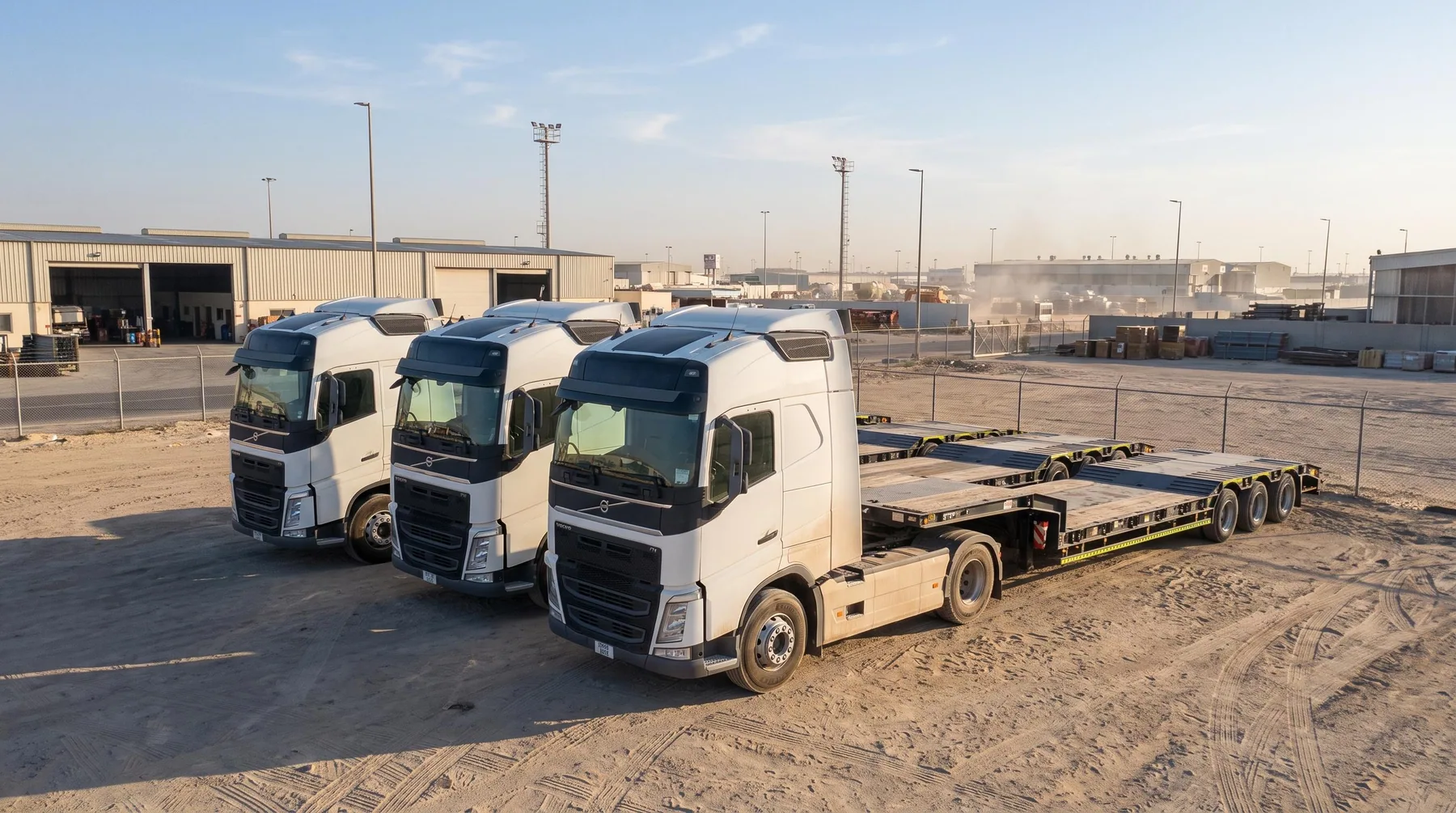
Decent Way offers its fleet either way: wet hire with an operator, or dry hire of the bare unit where you crew it yourself. That covers flatbeds from 40 to 60 ft and three- and four-axle lowbeds for trailers, plus wheel loaders, tippers, forklifts and staff buses for site work and crew transport. Larger arrangements — 100 t-plus and SPMT or modular moves — are handled by arrangement.
Because we deploy CICPA-cleared drivers, plant operators, riggers and banksmen directly, wet hire on a restricted site comes as one package with a single point of contact. Tell us the equipment, the site and whether you need an operator, and we will confirm the right unit and come back with a quote — usually within 2 business hours.
- Flatbeds 40–60 ft and three- and four-axle lowbeds — with or without a driver
- Wheel loaders and tippers for earthmoving and haulage
- Forklifts for material handling and awkward offloads
- Staff buses for crew transport to and from site
- 100 t-plus and SPMT / modular moves by arrangement
Related: CICPA trailer rental Wheel loader & tipper hire Forklift & material handling
Request a wet or dry hire quote
Tell us the equipment you need, the site, the duration and whether you want it with or without an operator, and we will confirm the right unit and come back with a clear quote — usually within 2 business hours. Send it through the quote form, call +971 58 227 4083 or reach us on WhatsApp on the same number. Operations run 24/7; quotes are handled Mon–Fri 08:00–16:00.
Frequently asked questions
What is the difference between wet hire and dry hire?
Wet hire supplies the equipment with an operator, and the supplier covers the driver, fuel, maintenance and insurance. Dry hire supplies only the bare machine, and your own team operates, fuels, maintains and insures it for the rental period. Wet hire gives you one accountable contractor; dry hire moves that responsibility to you.
Do ADNOC and CICPA sites allow dry hire?
On restricted ADNOC sites dry hire is rarely practical, because the operator must hold a valid CICPA pass, site induction and HSE standing to enter — not just the machine. That is why these sites usually call for wet hire with a cleared operator. Decent Way deploys CICPA-cleared drivers and plant operators directly with the equipment.
Who is responsible for fuel and maintenance on a wet hire?
On wet hire the supplier is responsible for the running fuel, servicing, breakdown cover and equipment insurance, as well as the operator. You get a working unit and a single line of responsibility. On dry hire all of that moves to you for the period the machine is in your yard or on your site.
Can I hire a trailer without a driver in the UAE?
Yes — that is dry hire, and it works when you have your own licensed driver, insurance and maintenance in place, typically for longer deployments on open sites. For short jobs, specialist units or restricted sites, wet hire with an operator is usually the better fit. Decent Way offers trailers both ways.
Which equipment does Decent Way offer as wet or dry hire?
Flatbeds from 40 to 60 ft, three- and four-axle lowbeds, wheel loaders, tippers, forklifts and staff buses — each available with or without an operator. Heavier 100 t-plus and SPMT or modular moves are handled by arrangement. Tell us the equipment, site and whether you need an operator, and we will confirm the right unit within 2 business hours.